Build ecosystem / Integration proposal

Synorb for coding-agent platforms.

Synorb gives coding agents a persistent content layer: thousands of structured streams that arrive as current, source-grounded Briefs and Signals. Builders can spend their agent runtime creating the product instead of repeatedly searching for and reconstructing its context.

This proposal and its demos were built independently by Synorb. No platform affiliation or endorsement is implied.

See what your builders can ship with Synorb.

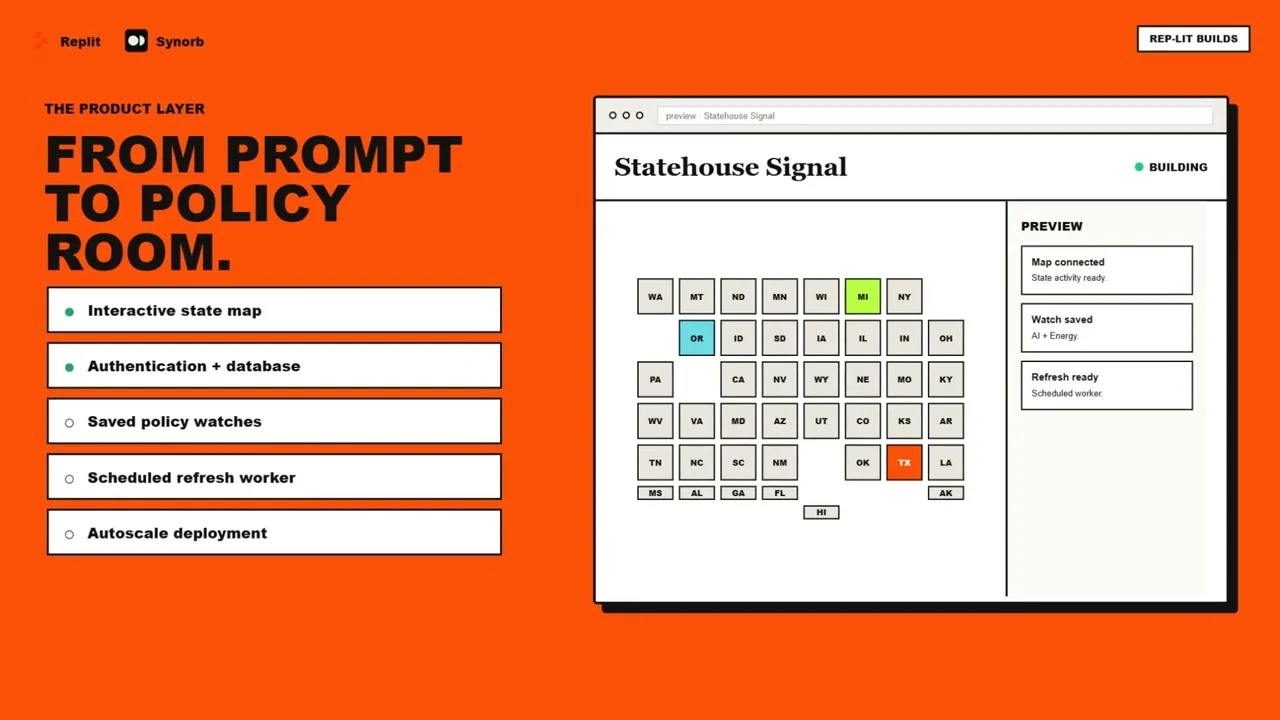
Synorb currently publishes independent setup paths for six major coding-agent environments. The first two product libraries contain sixteen complete one-shot prompts and fifteen short build films across media, legal, policy, health, finance, science, research, and publishing workflows.

Product proof
16 complete one-shot builds
Lovable9 products, 8 published films
Replit7 products, 7 published films
NextCursor, Claude, Codex, and Windsurf product libraries
Current access
One MCP, secure production REST
Build timeThe agent discovers streams and inspects cited examples through MCP
RuntimeThe shipped application calls Synorb REST from a protected backend
ProvisioningExisting credentials or a Starter account from Synorb Connect

What does Synorb add to a coding-agent platform?

Synorb complements the platform's product-building ability with content infrastructure designed for applications that must remain informed after deployment.

Faster successful builds

Prompts can start from discoverable streams and real response shapes instead of mock cards or an open-ended data-provider search.

Applications that stay useful

Scheduled refreshes, saved Beacons, stable identifiers, and source-linked Manifests keep the finished product current.

Clear trust boundaries

Briefs, claims, evidence, confidence, dates, citations, and source URLs remain available to the interface and downstream workflow.

More categories to build

Legal monitors, policy rooms, client portals, vertical publications, economic dashboards, and research feeds become repeatable product patterns.

The coding agent builds the product. Synorb keeps it informed.

Coding platform
Product and execution layer
BuildsInterface, database, authentication, backend routes, jobs, deployment, and product workflows
GuidesAudience, visual direction, information density, actions, and feature choices
Synorb
Temporal content layer
SuppliesCurrent Briefs, Signals, claims, entities, evidence, citations, dates, and source links
MaintainsTracked sources, structured streams, update windows, Beacons, and runtime delivery

A native integration can begin at the layer that fits the platform.

Approved MCP connector

A reviewed, documented Synorb server that builders can add without manually reconstructing transport and authentication settings.

Marketplace plugin

A discoverable Synorb integration with setup guidance, example prompts, supported tools, and platform-native installation.

OAuth or account provisioning

A protected activation path that creates or connects a Synorb account without exposing credentials in chat or generated client code.

Curated product templates

Platform-specific one-shot builds that could be maintained together as product examples, onboarding surfaces, and reusable customer starting points.

Works with today. Proposed as a native integration.

These demos, prompts, and compatibility guides were built independently by Synorb. Synorb is not currently affiliated with, endorsed by, or formally partnered with any named platform unless explicitly stated.

What would a native Synorb connector do?

Why integrate Synorb instead of letting every agent search the web?

Search is useful for an unknown gap. Synorb is designed for repeated product context: tracked sources become structured, source-grounded streams that can refresh a product without rebuilding the same context from scratch on every user request.

Does Synorb replace the coding agent or its web tools?

No. The coding agent remains the builder and can still use web search for genuine gaps. Synorb supplies the durable content layer for the sources, entities, and topics the product must keep watching.

How are secrets handled?

The MCP token belongs in the platform's protected connector configuration. Runtime API credentials stay in server-side secrets and are used only by the shipped application's backend route, never by browser code.

Can the integration begin without a large engineering project?

Yes. The existing MCP server, REST runtime, Synorb Connect provisioning route, setup guides, one-shot prompts, and product films provide a working base for an approved connector or marketplace listing before deeper native account linking.

For platform and integration teams

Evaluate a native Synorb integration.

We can share the technical architecture, product library, builder workflow, security model, and a scoped path from approved MCP listing to native account provisioning.